

During pregnancy, you may be supported by different health professionals.
Who you see and when depends on your model of care, your needs and where you receive care.
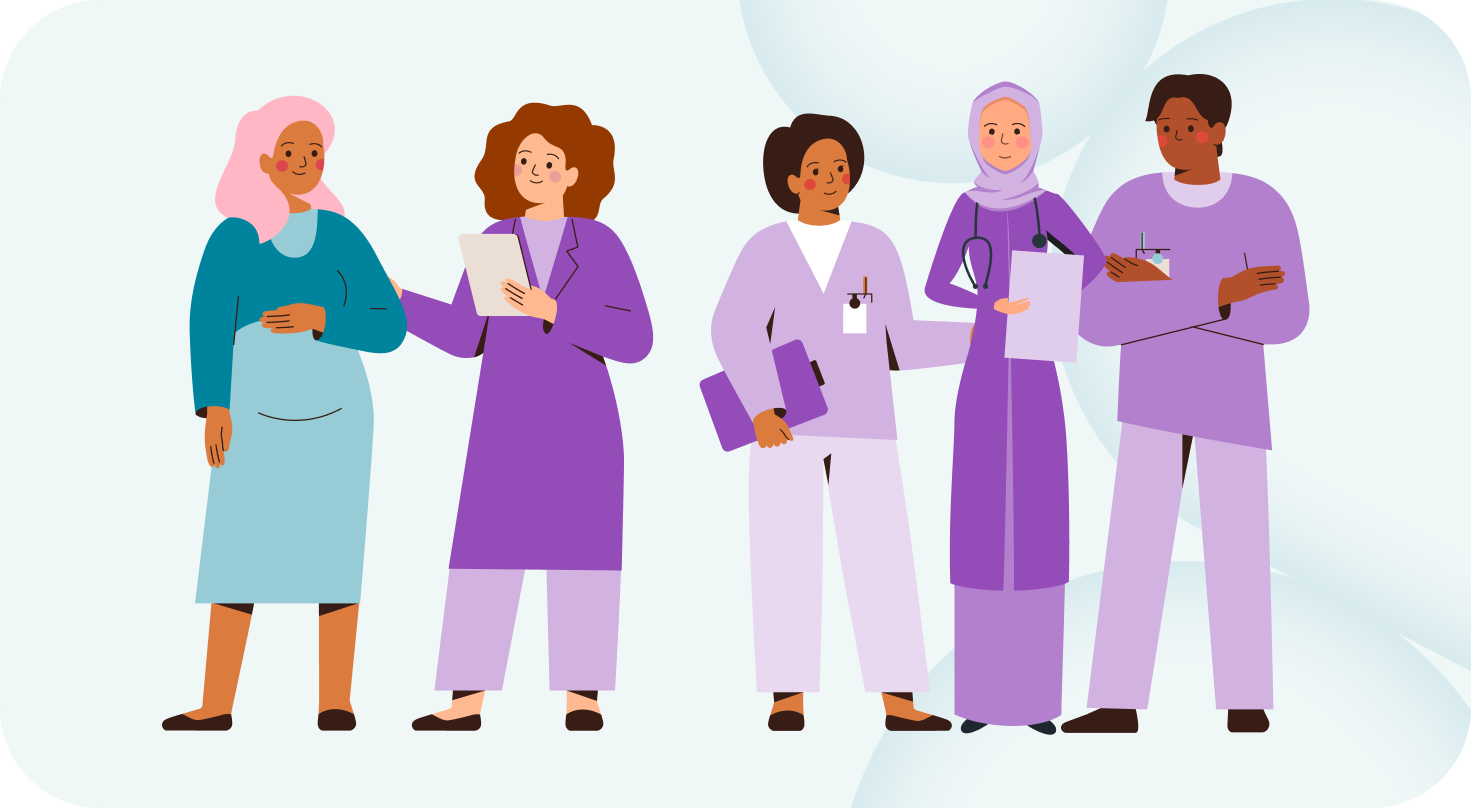
Your team works together to support you during pregnancy, birth and the early weeks after birth.
You can ask who is involved in your care, what their role is and how your care team works together. It’s okay to ask questions and be involved in decisions about your care.
Victorian maternity services aim to provide respectful, woman-centred care that recognises and records your preferences. This can include a preference for a female clinician. If this isn’t possible, your team will continue your care to keep you safe.
During pregnancy, your maternity care provider focuses on your pregnancy and birth while your GP continues to look after your general health.
Health professionals
Midwife
Midwives have training and skills to care for you throughout your pregnancy, birth and after your baby is born. They offer care in hospital, in a clinic or at home.
Midwives with additional training can prescribe certain medications, provide contraceptive care, request or perform ultrasounds and offer extended services.
If your pregnancy is low risk, a midwife may be your main or sole provider of care. If your pregnancy becomes more complex, midwives will work closely with doctors and other specialists.
General practitioner (GP) or doctor
General practitioners (GPs) are doctors that can provide care for your health across your whole life, including during pregnancy. They work with midwives and maternity teams so you and your baby receive the right care throughout pregnancy, birth and after your baby is born.
You can choose to see a GP to:
- confirm your pregnancy
- discuss care options and models of care
- attend regular pregnancy check-ups
- coordinate your care with a maternity hospital.
GP obstetricians (GPOs) have additional training in women’s health and can provide more specialised maternity care.
Obstetrician
Obstetricians are doctors with additional skills and training in women’s health. They can support you during pregnancy, birth and the postnatal period. They support vaginal birth, can perform assisted births and caesareans and support you by providing contraception after birth.
Maternal and child health nurse
Maternal and child health nurses are registered nurses and midwives with additional training and skills in child and family health. They can:
- monitor the health, growth and development of children from birth
- provide parenting, sleep and settling advice
- connect families with local services and supports.
All babies in Victoria are referred to this free service shortly after birth, regardless of their Medicare or insurance status, and remain involved up until your child goes to school. They also provide an assistance line for parents with questions about their child.
Contact the Maternal and Child Health Line on 13 22 29 (Available 24 hours, 7 days a week).
Social worker
Social workers support new and expectant parents with emotional, practical and social challenges so they can feel safe and supported during pregnancy and after birth.
Access to a social worker may vary based on your hospital's capability. If your hospital doesn’t have access to a social worker, you can ask to be referred on to a community service that can offer you this.
Other health professionals
Depending on your needs, you may also be supported by:
- Lactation consultants: For breastfeeding and infant feeding support.
- Anaesthetists: Doctors with additional specialist training to provide pain relief options during labour or birth including caesarean births.
- Paediatricians: Doctors with additional specialist training in the growth, development and health support from birth through childhood and adolescence.
- Neonatologists: Doctors with additional specialist training in complex newborn baby care.
- Neonatal nurse: Nurses that provide specialised nursing care for newborn babies’ medical needs and families during hospital care.
- Psychologists: For emotional and mental wellbeing support.
- Psychiatrists: Doctors with additional specialist training for mental health support and medicines to support mental wellbeing.
- Pharmacists: For medicine advice in pregnancy and breastfeeding.
- Sonographers and Radiographers: For pregnancy ultrasounds and imaging.
- Women’s health physiotherapists: For physical health, movement and pelvic floor function.
- Geneticists: For diagnosing genetic conditions.
- Genetic Counsellors: For explaining what genetic tests results mean for your baby and family.
Additional support
Aboriginal health worker and Aboriginal health practitioner
Aboriginal health workers and Aboriginal health practitioners are health professionals that support Aboriginal people and families to stay healthy through culturally safe, holistic care.
They combine cultural knowledge, community connection and health skills to support physical, social and emotional wellbeing. They are often a trusted first point of contact and help people navigate health services and access support.
They work alongside midwives, nurses, doctors and other health professionals, particularly within Aboriginal Community Controlled Health Organisations (ACCHOs).
Aboriginal Liaison officers assist Aboriginal women to access culturally safe and respectful heath care throughout pregnancy. They can help you to connect to hospital services, community supports and cultural resources, while advocating for your needs and preferences.
You can ask your midwife, doctor, GP or maternity service for a referral to an Aboriginal health worker, Aboriginal health practitioner or Aboriginal Liaison Officer at any stage of your pregnancy, birth or postnatal care.
Bicultural worker
Bicultural workers support women and families from diverse cultural and language backgrounds by helping them understand and access maternity services, communicate with healthcare providers, and navigate the health system. They can often be accessed through your hospital or community health service and provide support that is culturally appropriate and responsive to your family's needs.
Interpreters
Interpreters support communication if you prefer to communicate in a language other than English or use Auslan. They help make sure information is clear so you can make informed decisions about your care. Your maternity care provider can arrange an interpreter to be present at your appointment, or you can access an interpreter through Translating and Interpreting Service (TIS National) or the About the National Relay Service (NRS) | Access Hub for those with hearing difficulties.
Pastoral carers
Pastoral carers provide emotional, spiritual and culturally respectful support during pregnancy, birth or loss, based on your values and beliefs.
Doula
Doulas are non‑clinical birth companions who provide emotional, practical and informational support during pregnancy, labour, birth or after birth. Doulas are not registered health professionals and are not trained to offer clinical advice or care, they also can’t respond to medical emergencies if complications arise.
Doulas can work alongside (but do not replace) your clinical maternity care team and cannot provide clinical care.
Bereavement support person
Bereavement support persons provide emotional and practical support to families experiencing pregnancy loss, stillbirth or neonatal death.