
received better medications to help ensure their asthma is was well controlled at home.
MAGIC is a practical framework to improve asthma care. It gives health services:
- clear strategies to test and adopt
- evidence-based improvements drawn from research, expert advice and sector collaboration
- tools for fast-tracking change, including tips on how to embed changes into routine care
- guidance that helps sustain improvements over time.
MAGIC brings together five key areas where health services can make the biggest difference:
- Medication provision
- Asthma action plan
- GP integration
- Inhaler and spacer technique
- Community asthma program
Using ‘MAGIC’ in your service
Each part of MAGIC is based on evidence and can improve asthma care when used on its own. However, the greatest impact happens when all elements work together.
Using MAGIC as a complete set of changes gives health services the best chance to deliver consistent, high-quality care. When planning and testing improvements, consider all elements of MAGIC to get the greatest benefit for your service and the families you support.
MAGIC checklist
The MAGIC discharge checklist provides simple prompts to ensure every child with asthma receives consistent, high‑quality care across key components of asthma management.
Using the MAGIC change package
Each of the five MAGIC elements has its own webpage outlining the change concept and a set of practical change ideas that can be tested in practice.
A change concept is a broad idea about what needs to change to improve care.
A change idea is a specific, practical action that outs a change concept into practice. They are tested in day‑to‑day work, and initially on a small scale - for example with one patient, one clinician, or one shift, before being expanded into routine practice.
Testing changes in this way helps you understand what works, what needs adjusting, and whether the change is likely to be effective and sustainable over time.
The change ideas included in this change package are a starting point. Because every service is different, it is important to test and adapt these ideas in your local context, so they fit your systems, workflows and patient needs.

Medication provision
Ensuring that children leave hospital with the right medicines or prescriptions.
Learn more
Asthma action plan
Providing families with a clear asthma action plan and education they understand.
Learn more
GP Integration
Linking hospital care with a GP follow-up and ensuring timely communication between hospitals and primary care providers.
Learn more
Inhaler and spacer technique
Teaching children and families how to use inhalers and spacers before they leave the hospital.
Learn more
Community asthma program
Referring families to community-based asthma programs so they can access ongoing care and support before they leave the hospital.
Learn moreHow it was developed
The MAGIC change package, was formed through a collaborative process led by an expert advisory committee. The committee included clinical experts, consumers, representatives from key peak bodies (such as Asthma Australia) and executive members from Safer Care Victoria and the Victorian Department of Health.
Development was guided by the Institute for Healthcare Improvement (IHI), with a focus on applying improvement science principles to the design of the package. This approach ensured change ideas were structured for small‑scale testing, learning and adaptation before being embedded into routine practice.
The advisory committee reviewed the available evidence and identified five key change concepts to improve care outcomes for children with asthma. These concepts became the ‘MAGIC’ elements and reflect best practice, evidence‑based approaches to asthma care. They informed the development of practical change ideas that health services can test and adapt in their local context..
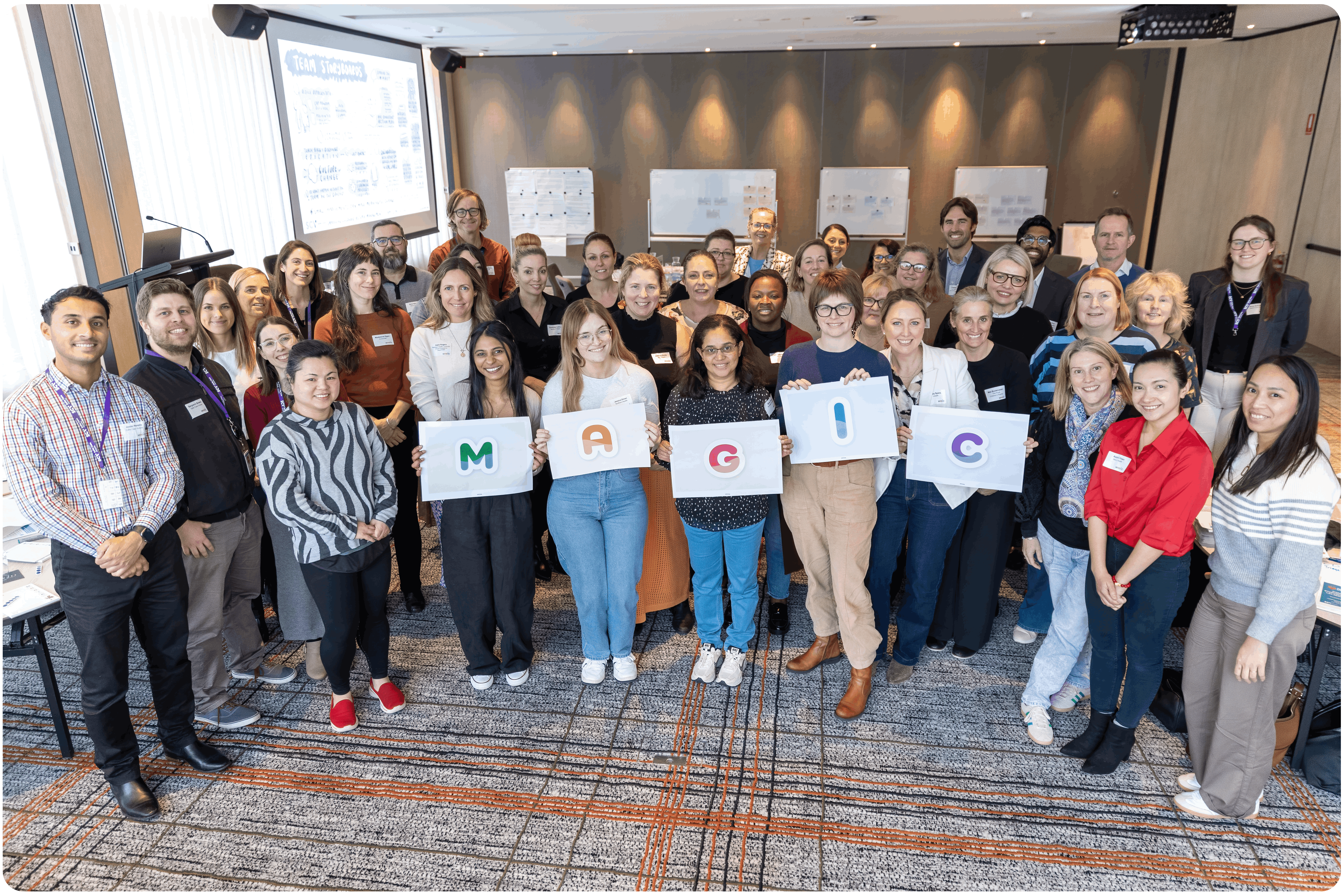
Victorian health services tested these change ideas through the Improving childhood asthma collaborative. Across participating sites, the following outcomes were seen:
-
651 children
-
131 families
received high-quality asthma care by linking with community asthma programs.
-
84%
of children and their carers received high-standard, teach-back education about how to use inhalers and spacers correctly (up from 39%),
-
51%
of children leaving hospital had their next follow-up GP appointment already booked (something not routinely done previously).
For more information, see the Improving Childhood Asthma Management collaborative.